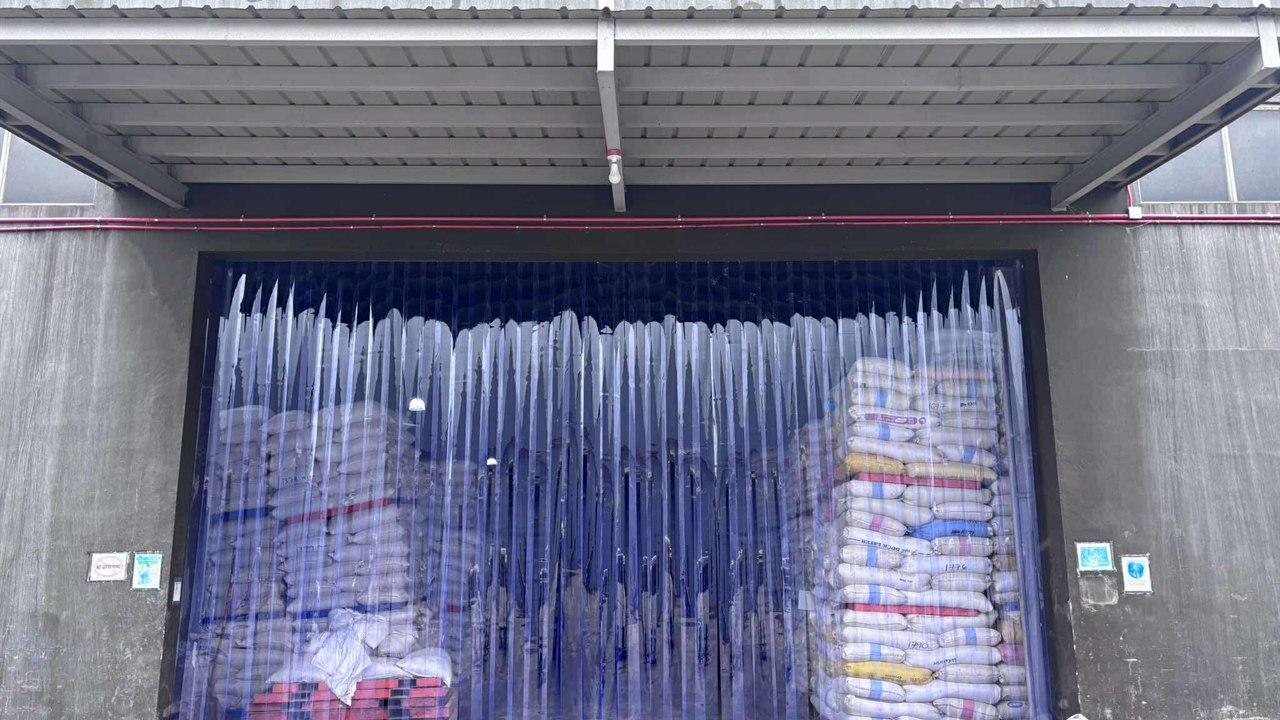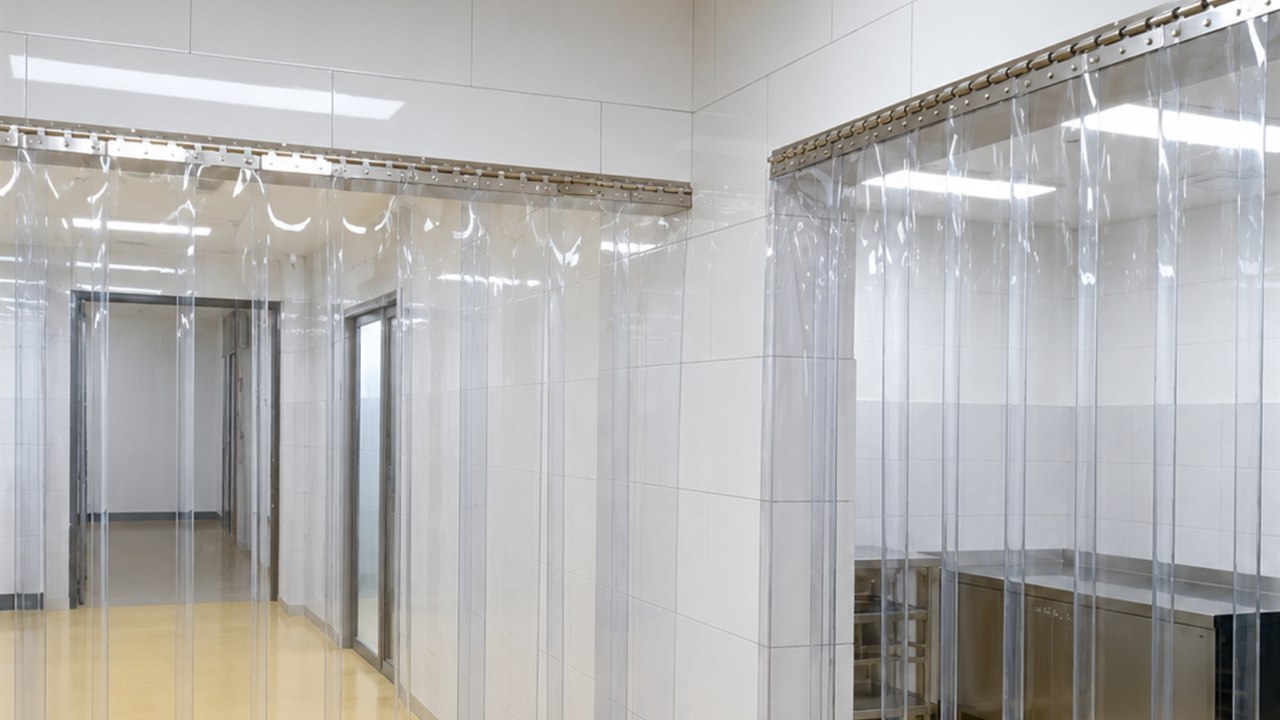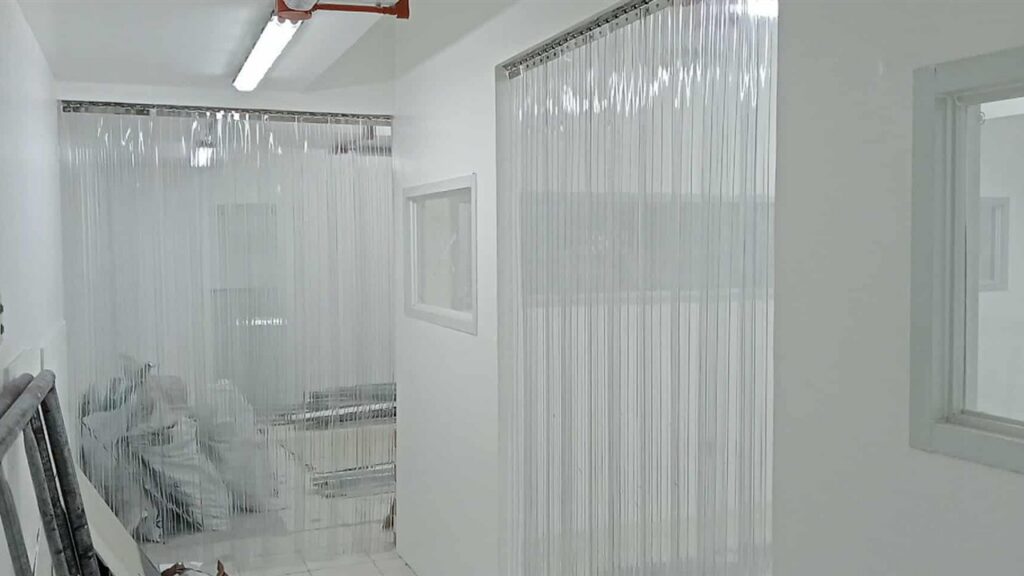
Noticed a smell after installing your new PVC strip curtains? We recommend starting with the room and installation area, then giving our strips a gentle first wipe. This guide covers basic surface care, ventilation checks and common questions about new-curtain odour.
First actions: check what changed, arrange fresh air, clear packing, wipe gently and check how the strips hang.
For a strong smell or irritation, move away and inform the site safety lead. Follow the site's response procedure and seek appropriate medical advice for symptoms.
If you bought the curtain elsewhere, follow that supplier's instructions.
Illustrations explain the steps; they are not photographs of completed projects.

1. Check the curtain and installation area
Start with the label or order reference for your PVC strip curtain. Keep any batch information and note when the strips were unpacked and installed.
Look at what else changed around the doorway: wrapping, paint, sealant, adhesives or cleaning products. Ask the installer what was used. A smell noticed after installation does not identify its source, so record the changes before adding a treatment. Do not deliberately sniff materials at close range.
Keep the product information with the site's installation records.
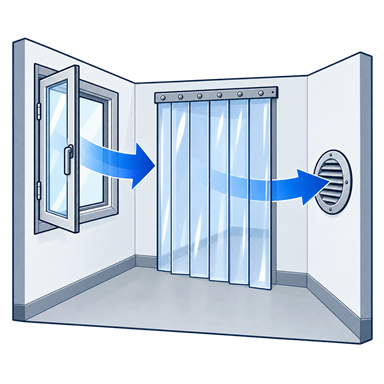
2. Arrange fresh air through an approved route
Ask your facilities team to check outdoor-air supply and extraction to outdoors. A fan moving air around the room does not by itself provide fresh-air exchange. The EPA's ventilation guidance explains why bringing in outdoor air differs from recirculation.
Use a suitable inlet and outlet, with incoming air clear of vehicle exhaust, smoke and other contamination. Keep the airflow from carrying the concern into another occupied area.
In cold rooms, food areas and fire-controlled openings, preserve the required temperature, hygiene and fire controls. Let the responsible team approve the route; do not prop controlled doors open or change ventilation settings yourself.

3. Clear packing and leftover materials
Remove wrapping, cartons and offcuts from the working area through the site's waste process. Photograph the labels first, then keep spare strips as instructed.
Record any installation products used and retain their instructions. Handle leftover products and containers according to their labels; do not leave open containers beside the entrance.
Keep the doorway and walking route clear while you finish the handover. Clearing the area also makes it easier to track where the smell is being noticed.
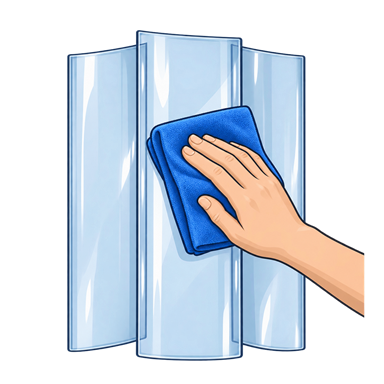
4. Give our strips a gentle first wipe
For our strips, we recommend a clean, soft cloth and lukewarm water as the starting point for first surface care. Lightly dampen the cloth and wipe one strip at a time, supporting it without pulling on the mounting parts. Keep the cloth clean as you work.
Use gentle pressure. Avoid abrasive pads, soaking and strong cleaning products. Warm-water wiping with a clean cloth is also described in PVC strip care guidance.
Keep this first wipe simple. If the supplied grade instructions or the site's hygiene procedure require a different method, follow those requirements. Use only cleaning products permitted by the supplied-grade instructions and site procedure; never mix cleaning products. The EPA also advises following cleaning-product directions.
Wiping removes surface dirt. We do not promise that it will resolve the cause of a smell.
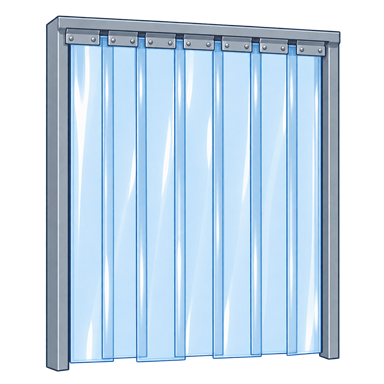
5. Let the strips dry and check the fit
Leave the strips hanging vertically and follow their drying instructions. Do not use added heat or direct sun to speed up the process; PVC care guidance cautions against those drying methods.
Check that the strips hang freely and retain their intended overlap. Look for an obviously loose plate, hanger or rail, and ask the responsible installer to address any fitting problem. Avoid pulling, bending or adjusting the mounting system while cleaning.
Questions about new PVC curtain odour
Where can the smell after installation come from?
Several materials may contribute, including the newly unpacked material and products used around the doorway. The EPA lists building materials, adhesives and cleaning products as possible sources of volatile organic compounds. Check what was unpacked or applied during installation rather than assume the strips are the only source. Smell alone cannot identify a particular chemical or establish its source.
How long should the smell take to disappear?
There is no single duration for every material and room. Ventilation, the material and other products used nearby can affect what is noticed. A persistent strong odour or irritation calls for a site assessment rather than an assumed waiting period.
Will running a fan solve it?
A fan can move air without replacing it. Ask your facilities team to check the actual outdoor-air and exhaust route. Air movement at the strips alone does not show that the room is receiving fresh air.
Can I add a homemade cleaner or deodoriser?
We recommend keeping the first wipe to a soft cloth and lukewarm water. Follow the supplied-grade and site instructions before using another product. An improvised mixture or fragrance does not replace checking the source and ventilation.
Does the smell tell me whether the curtain is safe?
No. Smell alone cannot establish safety, whether it is strong, pleasant or absent. The EPA's odour guidance explains this limitation. Use the product information and the site's assessment process.